

What ID Do I Need for a Texas Notary? 5 Things to Know Before Your Appointment
![[HERO] What ID Do I Need for a Texas Notary? 5 Things to Know Before Your Appointment](https://cdn.marblism.com/H8eZHGHxudJ.webp)
You've got documents to notarize. You've scheduled your appointment. Now comes the question that trips up more people than you'd expect: what ID do you actually need to bring?
Texas has specific rules about acceptable identification for notarization. Show up with the wrong ID: or an expired one: and your appointment is over before it starts.
Here's what you need to know before you walk through the door.
1. Texas Accepts These Forms of Identification
Not every piece of plastic in your wallet qualifies. Texas law requires government-issued photo identification with specific elements:
- Your photograph
- Your signature
- Your full legal name
- Your date of birth
Acceptable IDs include:
- Driver's license : From Texas or any other U.S. state
- State-issued ID card : Any U.S. state works
- U.S. passport or passport card : Federal identification accepted
- U.S. military ID : Active duty, reserve, or retired
- Driver's license or ID from Mexico or Canada : Cross-border documents recognized
- Foreign passport : Must include a stamp from U.S. Citizenship and Immigration Services
- Texas Department of Corrections inmate ID : For incarcerated signers
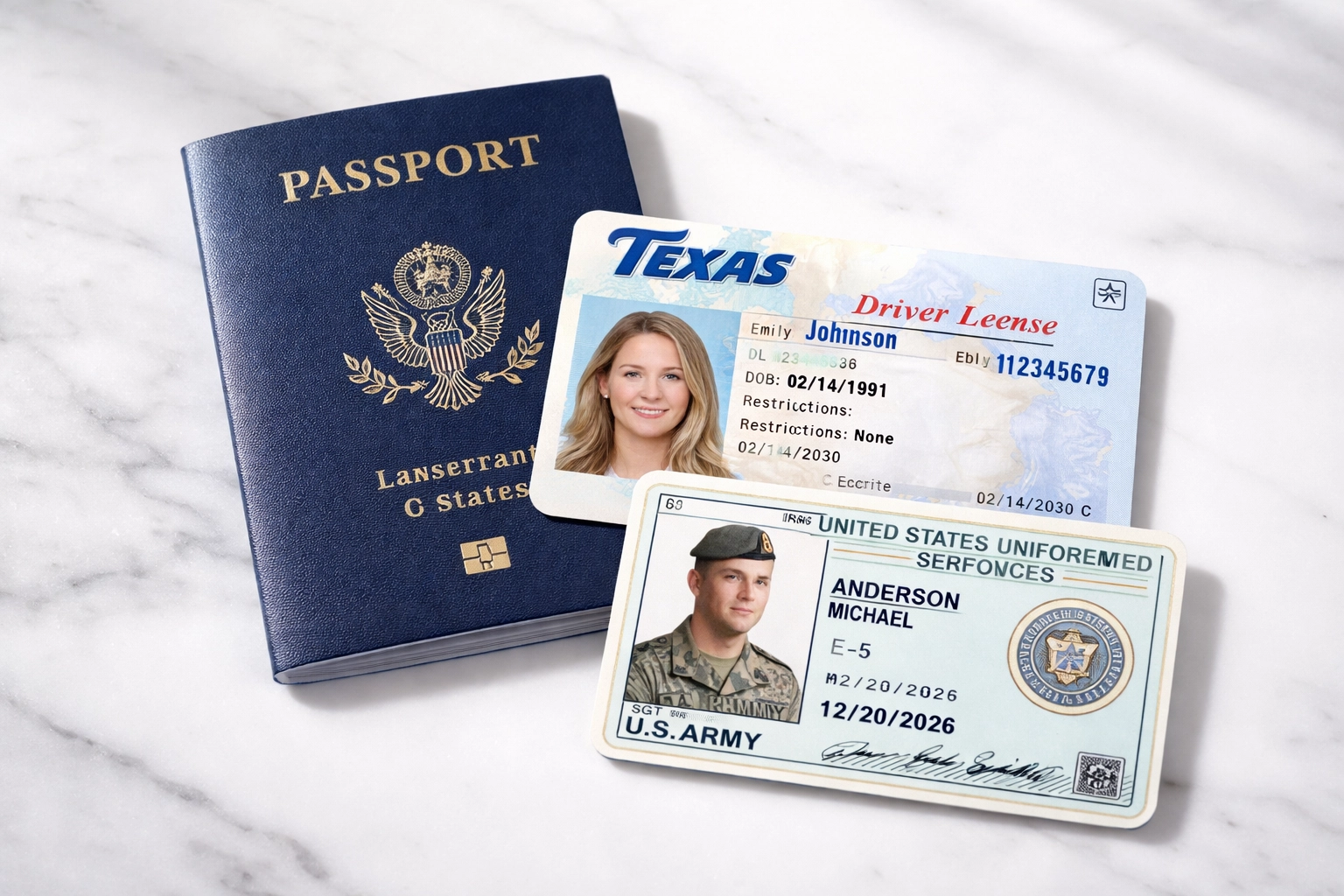
The key factor: your ID must be issued by a government entity. Private organizations, employers, and membership clubs don't count.
If you're unsure whether your specific ID qualifies, reach out before your appointment. A quick question now saves wasted time later.
2. Your ID Must Be Current and Unexpired
This is where appointments fall apart.
Your identification must be current and unexpired at the time of notarization. Texas notaries cannot: by law: accept expired documents, regardless of how recently they expired.
Common scenarios that don't work:
- Driver's license that expired last month
- Passport that's been expired for years but "still looks fine"
- Temporary paper license without a photo
- ID with a renewal sticker that fell off
What to check before your appointment:
- Look at the expiration date on your ID
- Confirm the name matches what's on your document
- Make sure the photo is still recognizable as you
- Verify your signature is visible
If your ID expires soon, consider renewing it before scheduling your notarization. Texas DPS allows online renewals for eligible licenses: often processed within days.
Got a name change situation? Your ID name must match the name on the document being notarized. If your driver's license says "Jane Smith" but the document says "Jane Doe-Smith," you may need to update one or the other first.
3. What Won't Work as Identification
Just because it has your name and photo doesn't mean it qualifies.
These are NOT acceptable for Texas notarization:
- Social Security cards
- Work ID badges or employee identification
- Membership cards (Costco, gym, club memberships)
- Student ID cards: even from universities
- Medicare or Medicaid cards
- Credit or debit cards
- Library cards
- Temporary driver's licenses without a photo
- Expired government IDs of any kind
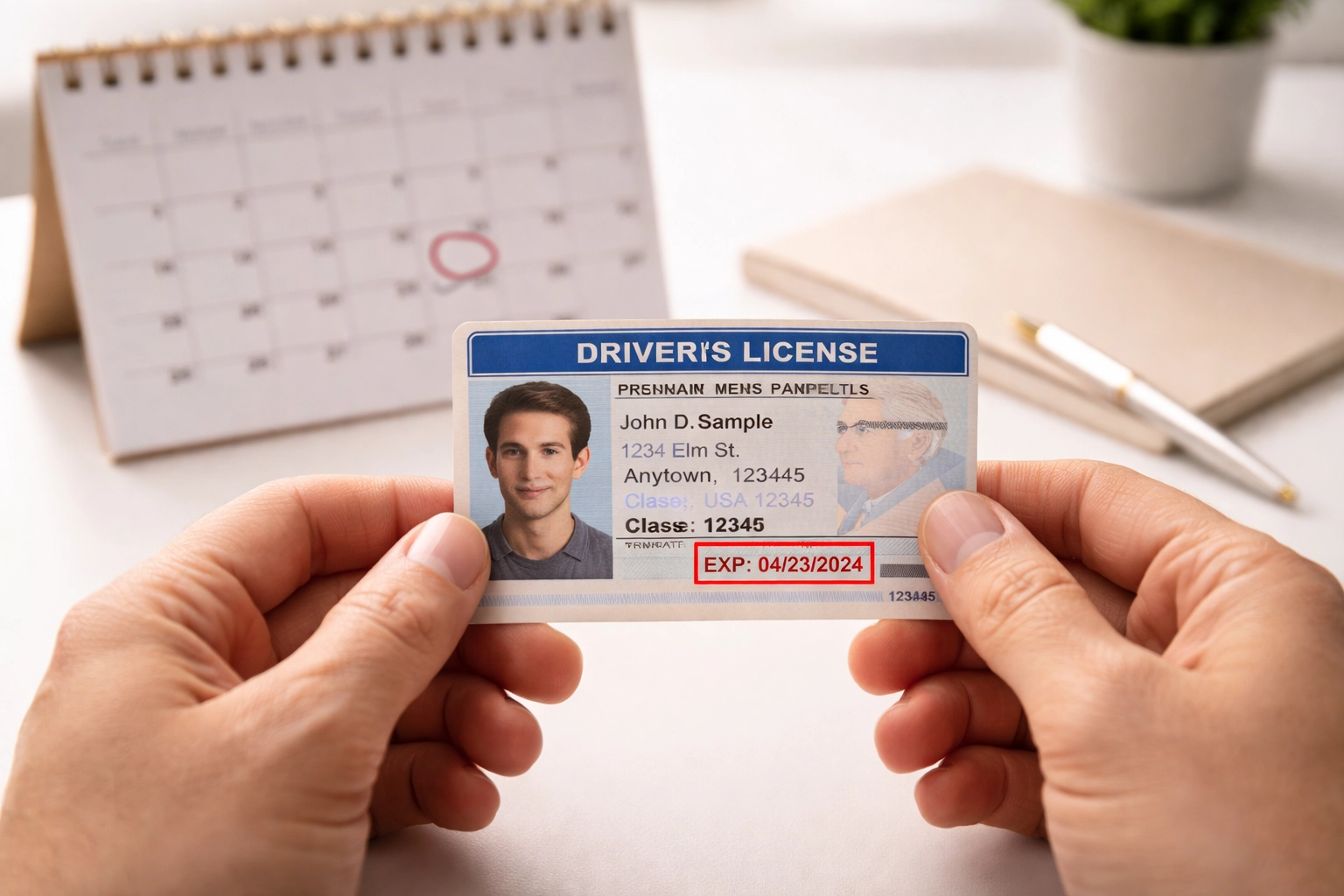
Why the restrictions?
Notarization exists to verify identity and prevent fraud. Government-issued IDs have security features: holograms, barcodes, standardized formats: that make them harder to forge. Private IDs lack these protections.
A notary who accepts improper identification puts their commission at risk and potentially enables fraud. No legitimate notary will bend these rules.
Pro tip: If you only have one form of acceptable ID, treat it carefully. Losing your only valid identification right before a notarization appointment creates headaches you don't need.
4. In-Person vs. Remote Online Notarization: ID Requirements Differ
Texas allows two types of notarization: traditional in-person and Remote Online Notarization (RON). The ID requirements overlap but aren't identical.
In-Person Notarization
You physically meet with the notary. You hand over your ID. They examine it, compare your face to the photo, verify the details, and proceed.
Requirements:
- Physical, government-issued photo ID
- ID must be current and unexpired
- Must be present in person
Remote Online Notarization (RON)
You connect with a notary via secure video conference. The process happens entirely online: no physical meeting required.
Requirements:
- Government-issued photo ID (you'll hold it up to your camera)
- Identity proofing: a series of knowledge-based authentication questions
- Credential analysis: software verification of your ID's authenticity
- Stable internet connection and working camera/microphone

RON adds extra verification layers because the notary can't physically handle your ID. The identity proofing questions pull from public records: things like previous addresses, vehicle information, or account history. You'll need to answer correctly to proceed.
When RON makes sense:
- You're out of state or traveling
- Mobility limitations make in-person appointments difficult
- Time constraints require flexibility
- Documents need notarization outside business hours
Both methods are legally valid in Texas. The choice depends on your situation and preferences. Check out our services page to see what options work best for your needs.
5. No Valid ID? Credible Witnesses Can Help
Life happens. Maybe your wallet was stolen. Maybe your license expired and you haven't renewed it yet. Maybe you're helping an elderly relative who no longer drives.
Texas law provides an alternative: credible witnesses.
How Credible Witnesses Work
A credible witness is someone who:
- Personally knows you
- Can verify your identity under oath
- Has no financial interest in the document being notarized
- Has no beneficial interest in the transaction
- Possesses valid, acceptable identification themselves
The credible witness essentially vouches for your identity. They take an oath, sign the notarial record, and their information becomes part of the documentation.
What credible witnesses must do:
- Appear with you at the notarization: in person or via video for RON
- Present their own valid government-issued ID
- Swear or affirm that they know you and that you are who you claim to be
- Sign the notary's journal or record
Who Can Serve as a Credible Witness?
Good candidates:
- Long-time friends or neighbors
- Extended family members (with no stake in the document)
- Colleagues who know you well
- Religious leaders or community members
Who cannot serve:
- Anyone named in the document
- Anyone who benefits from the transaction
- Anyone with a financial interest in the outcome
- The notary performing the service

Planning Ahead
If you know you'll need a credible witness, arrange this before your appointment. The witness needs to clear their schedule, bring their own ID, and understand what they're agreeing to.
Last-minute scrambling for a credible witness rarely ends well. Plan ahead.
Preparing for Your Appointment
A successful notarization starts with preparation. Before your appointment:
Check your ID:
- Is it government-issued with a photo and signature?
- Is it current and unexpired?
- Does the name match your document exactly?
Gather your documents:
- Bring all pages: don't leave anything behind
- Don't sign beforehand unless instructed
- Know what type of notarization you need (acknowledgment vs. jurat)
Confirm the details:
- Date, time, and location (or video link for RON)
- Any additional requirements specific to your document
- Payment method accepted
If using a credible witness:
- Confirm they're available
- Remind them to bring valid ID
- Ensure they understand the process
Questions?
Still unsure what you need? Have an unusual ID situation? Dealing with documents that require specific handling?
Reach out before your appointment. A five-minute conversation now prevents a wasted trip later.
Visit our FAQ page for answers to common questions, or contact us directly to discuss your specific situation.
At Dolph Integrity Services, we handle notarizations the right way: no shortcuts, no confusion, no wasted time.
